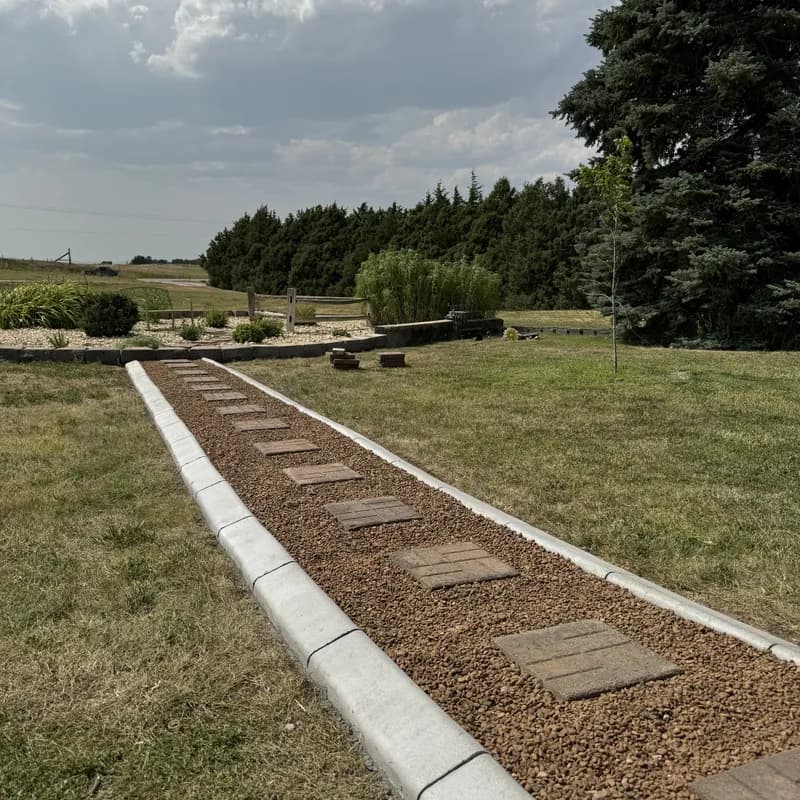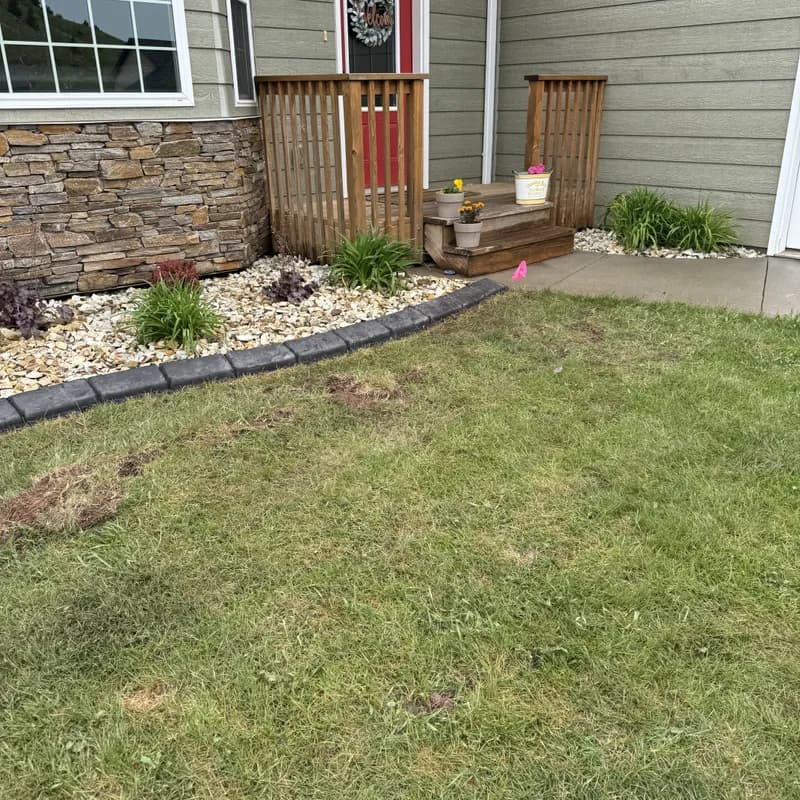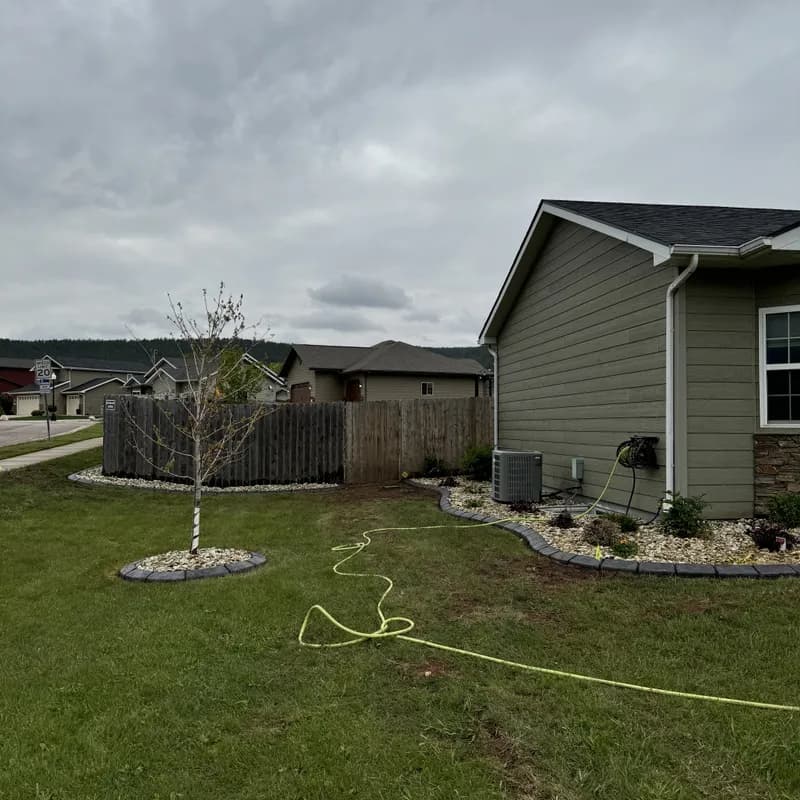
If you’re adding a patio to your Black Hills home, you’ll likely choose between paver stones and poured concrete. Both have their place, but they perform very differently in our climate. This guide compares the two honestly so you can make the right choice for your property.
What Are Paver Patios?
Paver patios are built from individual interlocking stones — typically concrete pavers, natural stone, or brick — set on a prepared base of compacted gravel and sand. The individual units interlock to create a surface that’s both flexible and incredibly strong.
Pavers come in a wide range of shapes, colors, patterns, and textures. You can create anything from a clean, modern look to a rustic natural stone aesthetic. The design flexibility is one of their biggest advantages.
What Are Poured Concrete Slabs?
A poured concrete patio is a single, monolithic slab of concrete formed and finished on-site. It can be plain gray, stamped with patterns, colored, or given a broom finish for texture.
Concrete patios are typically faster to install and can be less expensive upfront than pavers. Stamped and colored concrete can mimic the look of pavers or natural stone at a lower initial cost.
Durability in Black Hills Climate
This is where the biggest difference shows up. In the Black Hills, we experience dozens of freeze-thaw cycles every winter. When water gets into concrete and freezes, it expands. For a monolithic slab, this means cracking — and once a slab cracks, the damage is permanent.
Paver patios handle freeze-thaw dramatically better because the individual units can flex independently. If the ground heaves slightly, the pavers move with it and settle back. If one paver cracks, you replace that single unit — not the entire patio.
This is why professional hardscapers in cold climates overwhelmingly recommend pavers over poured concrete for patios and walkways.
Pro Tip
The #1 factor in paver patio longevity is the base. A properly compacted gravel base (usually 6–12 inches deep) prevents settling and ensures your patio stays level for decades.
Cost, Maintenance & Aesthetics
Poured concrete costs less upfront, but cracks are expensive to repair and you may need full replacement in 10–15 years in our climate. Pavers cost more initially but last 20+ years with minimal maintenance and no cracking issues.
Maintenance for pavers involves occasional sweeping and re-sanding joints every few years. Concrete requires sealing every 2–3 years to reduce cracking and staining. Stamped concrete can be especially high-maintenance as the sealer wears unevenly.
Aesthetically, pavers offer more options. Natural stone pavers provide a premium look that stamped concrete can imitate but never truly match. And pavers age gracefully, while concrete tends to look worse over time as cracks develop.
Our Recommendation
For Black Hills properties, we recommend pavers for patios, walkways, and any outdoor living surface. The combination of freeze-thaw resistance, repairability, design flexibility, and long-term value makes them the clear winner in our climate.
Poured concrete can still make sense for utility slabs (like next to a garage) or areas where aesthetics are less important. But for your outdoor living space — the patio where you’ll grill, host, and relax — pavers are the smarter investment.