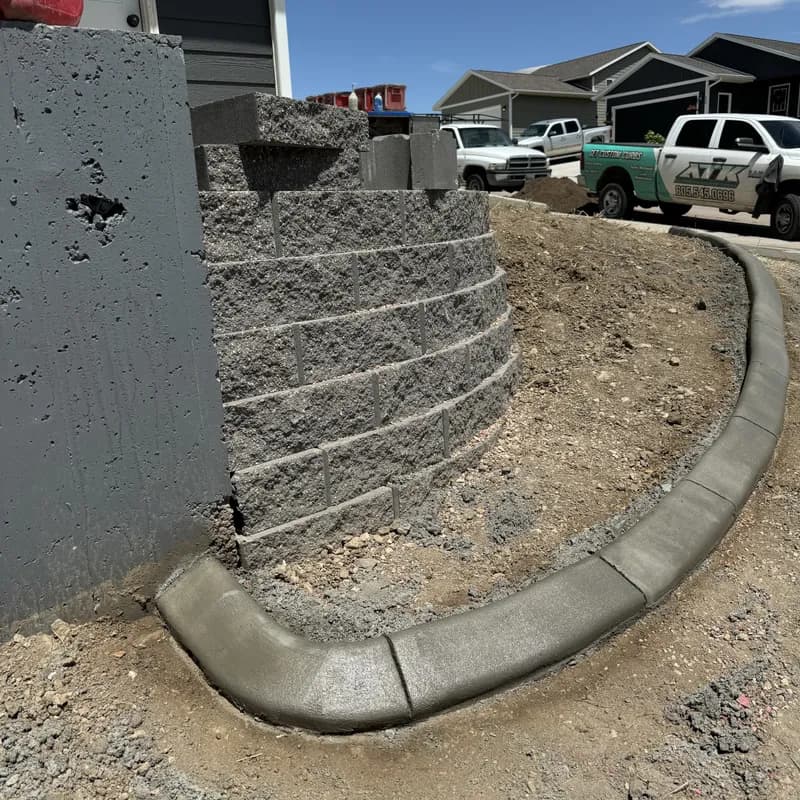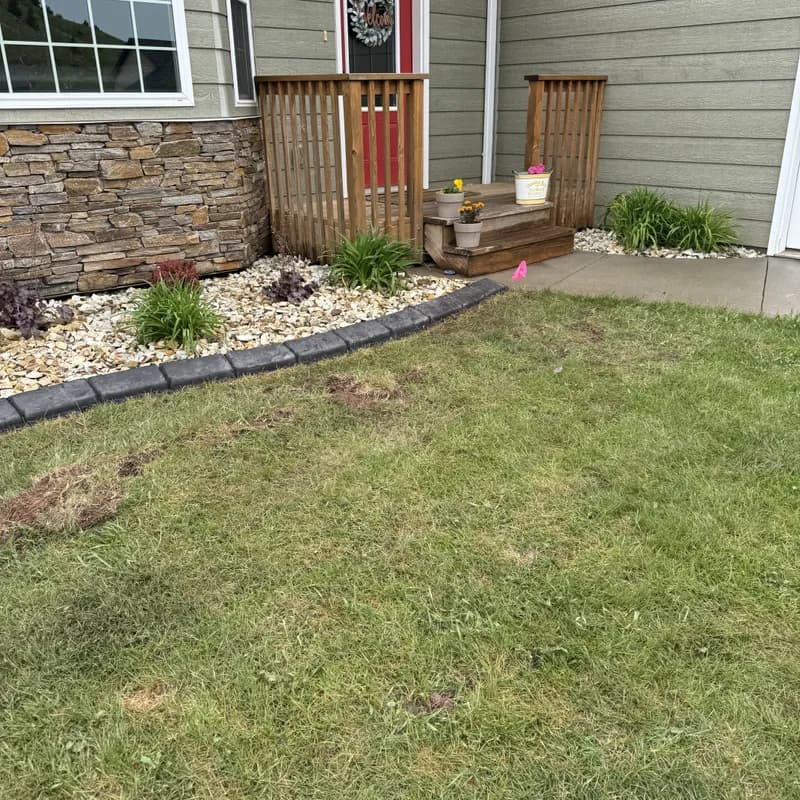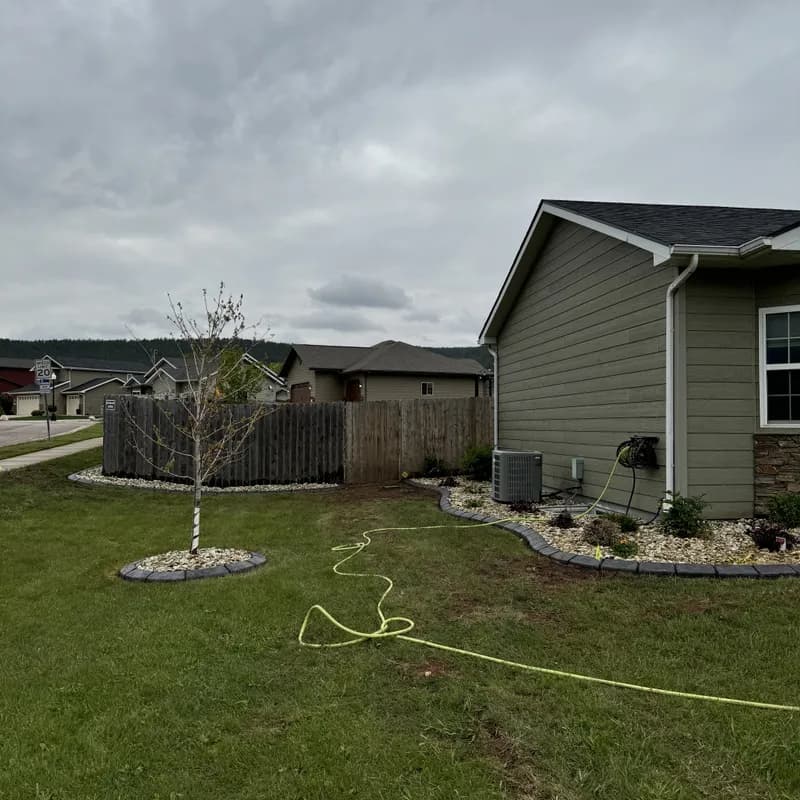
If you’ve ever noticed a clean, continuous concrete border running along someone’s flower beds or driveway, you’ve seen landscape curbing. It’s one of the most effective ways to define garden beds, eliminate tedious trimming, and add lasting curb appeal to your property. But what exactly is it, and how does it work? This guide covers everything a homeowner needs to know.
How Landscape Curbing Works
Landscape curbing is a continuous concrete border that’s extruded on-site using a specialized curbing machine. Unlike pre-cast blocks or plastic edging you buy at the store, curbing is formed directly on your property in one seamless piece — no joints, no gaps, no sections that can shift apart over time.
The process starts with site preparation. Your curbing contractor marks the layout, prepares the base, and mixes the concrete. The curbing machine then extrudes the concrete through a shaped die (called a profile) as it rolls along your layout. The result is a smooth, continuous border that follows any curve or straight line your design requires.
Most residential curbing jobs are completed in a single day. After installation, the curbing needs 24–48 hours to cure before you can resume normal activity around it.
Pro Tip
Ask your curbing contractor if they use fiber-reinforced concrete. It adds strength and helps prevent cracking in climates with freeze-thaw cycles, like the Black Hills.
Curbing Styles, Stamps & Colors
One of the biggest advantages of concrete curbing is customization. You choose the profile (the cross-sectional shape), the stamp pattern, and the color — all of which are applied during installation.
Common profiles include slant curb (angled face, great for mowing), mower curb (flat top you can drive a mower wheel on), and bullnose (rounded top for a classic look). Decorative profiles with scalloped edges or extra height are also available.
Stamp patterns give curbing the look of hand-laid brick, flagstone, cobblestone, or other natural materials at a fraction of the cost. Integral color is mixed directly into the concrete so it won’t chip, peel, or fade like paint or surface-applied color.
Benefits of Landscape Curbing
Clean, defined bed lines that eliminate the need for string trimming along borders. This alone saves homeowners hours of maintenance every season.
Curbing prevents grass runners and weeds from creeping into your beds, keeping mulch and rock contained where it belongs. It also stops soil erosion along the edges of garden beds.
Because curbing is a permanent installation, it adds real curb appeal and property value. It signals to buyers that a property is well-maintained and professionally landscaped.
How Long Does Curbing Last?
Properly installed concrete curbing lasts 20+ years in most climates. In the Black Hills, where freeze-thaw cycles are a real concern, the quality of the base preparation and the concrete mix matters significantly.
A reputable installer uses reinforced concrete, prepares a solid compacted base, and accounts for expansion and contraction. This is why hiring a certified, experienced curbing installer — not just someone with a machine — makes all the difference.
Is Curbing Right for Your Yard?
Curbing is a great fit for most properties. It works on flat and sloped terrain, in front and back yards, around driveways, walkways, trees, and anywhere you want a clean border between lawn and bed.
The main consideration is budget. Concrete curbing costs more upfront than plastic edging, but lasts dramatically longer and requires zero maintenance. Most homeowners find it pays for itself in reduced upkeep and increased property value within a few years.
Pro Tip
If you’re planning a larger landscaping project, install curbing first. It defines your bed lines and gives your landscaper clean borders to work within.